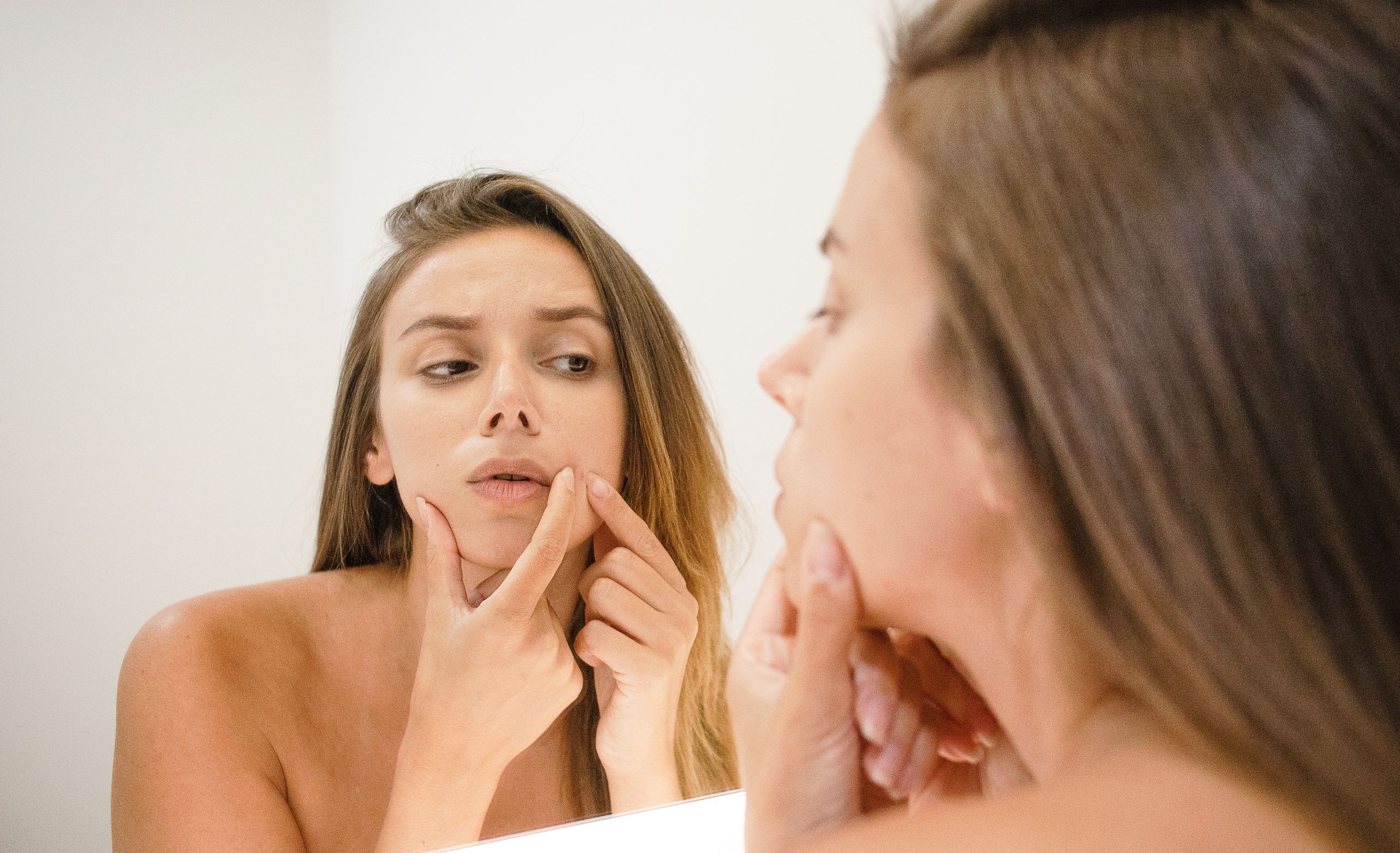
Summer, sun, and breakouts — it happens when heat causes the skin’s sebum production to increase. But there’s no reason to let that spoil your mood! With the right skincare routine, your skin will quickly return to balance.
While some enjoy sunny days with a radiant complexion, others struggle with increased breakouts during the warmer months — not only on the face but also on the back or décolleté.
Fettige, unreine Haut im Sommer hat verschiedene Ursachen. An warmen Tagen schwitzt die Haut, dabei geht Feuchtigkeit verloren. Um den Flüssigkeitsverlust wieder auszugleichen, kurbelt der Körper die Talgproduktion an. Schießt die Talgproduktion über, wird die Haut ölig und neigt vermehrt zu Pickeln.
Verstärkt werden Hautunreinheiten bei empfindlicher Haut auch durch häufiges Baden in Meer- oder Chlorwasser oder zu aggressive Hautreinigungsprodukte, wie beispielsweise chemisches Peelings, denn diese können die Haut zusätzlich austrocknen und damit die Talgproduktion ankurbeln.
In addition, pores are more likely to become clogged in summer due to increased sweating — especially when using makeup or rich, heavy sunscreens.
Proper Cleansing Is Especially Important for Blemish-Prone Skin
The first step to clear and healthy skin is always the right cleansing routine — especially for oily or blemish-prone skin. At the same time, it’s important not to further irritate skin that’s already out of balance by using products that are too harsh.
While cleansing with water is usually sufficient for normal skin in the morning, oily or combination skin benefits from using a cleansing gel and a toner — especially if you’ve sweated during a warm summer night. In the evening, the rule is simple: everything must come off! The mix of sweat, makeup, sunscreen, and dust creates the perfect breeding ground for breakouts.
-
 Herbacin Face Care – Cleansing Oil21,95 € n. a.
-
Herbacin Skin Solutions Gentle Face Scrub – 75 ml Tube7,50 € n. a.
-
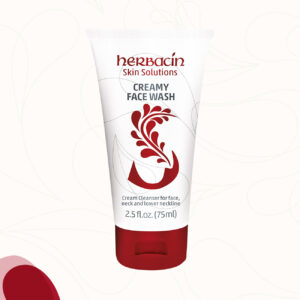
Herbacin Skin Solutions Creamy Face Wash – 75 ml Tube7,50 € n. a.


Tips for a Cleansing Routine for Oily Skin
Step 1: Sunscreen and makeup can be removed gently yet effectively with a cleansing oil. In fact, oily skin benefits greatly from this mild method — following the principle “like dissolves like.” Harsh cleansers, on the other hand, can dry out the skin unnecessarily, which only stimulates even more sebum production.
Step 2: Doppelt hält besser, gerade bei unreiner bzw. fettiger Haut kann mit einer sanften Waschcreme das verbleibende Öl aus Schritt 1 abgewaschen werden. Wer eher trockene Haut hat, profitiert von den Lipiden aus der Ölreinigung und kann, je nach Zufriedenheit mit dem Hautgefühl, auch auf einen zweiten Reinigungsschritt verzichten.
Step 3: Den Abschluss unserer Reinigungsroutine für fettige und unreine Haut bildet ein mildes Tonic. Dieses erfrischt, bringt die Haut wieder in Balance und fördert die Regulation des Hautfettgehalts. Zudem ist ein Tonic die ideale Vorbereitung der Haut für weitere Pflegeprodukte.
An exfoliant can also help with blemishes by removing dead skin cells and deeply cleansing the pores. However, it’s important not to overdo it. After exfoliating, the skin can become irritated and especially sensitive to UV radiation — so it’s best to exfoliate in the evening before going to bed. The exfoliating particles should also be gentle rather than coarse. Fine jojoba wax beads have proven particularly effective. Chemical peels, on the other hand, are not ideal for summer and should only be performed by dermatologists or professional estheticians.
What to Do About Pimples in Summer
In addition to proper cleansing, it’s important to keep blemish-prone skin well-hydrated during summer. It’s a common misconception that oily or greasy skin is automatically moisturized. Lightweight moisturizers with aloe vera, hyaluronic acid, and glycerin have proven especially effective. For best results, combine them with soothing ingredients such as chamomile blossom or marigold extract to calm the skin and maintain its balance.
Pimples should be treated in a targeted way. Spot treatments or pimple gels are ideal for this, as they can be applied directly to affected areas. These products are designed to dry out blemishes while also reducing inflammation.
A proven anti-acne ingredient is salicylic acid — it helps to remove excess oil, has antibacterial and anti-inflammatory properties, and stimulates the skin’s natural renewal process. For best results, combine it with soothing ingredients such as panthenol and bisabolol to support quick skin recovery.
Did You Know? Increased Sebum Production Also Affects the Scalp in Summer
It’s not just the skin on your face and body that works up a sweat in summer. Your scalp can also become unbalanced due to frequent swimming, sun exposure, and perspiration under hats. The result: greasy hair and, in some cases, even persistent dandruff.
If you tend to have oily hair in summer, it’s important to wash your hair and scalp regularly with a shampoo that helps restore balance. Look for formulas that have a soothing and regulating effect on the scalp — natural ingredients like ginger, birch, and lemon balm extracts are especially beneficial.
For persistent, oily dandruff combined with an itchy scalp, use a specialized anti-dandruff shampoo. The first step in combating dandruff is always a thorough cleansing of both scalp and hair.
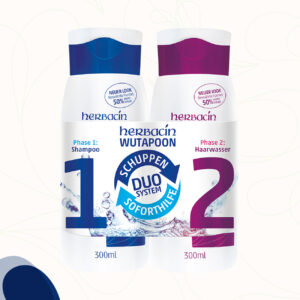
The anti-dandruff complex in Herbacin Wutapoon Shampoo combines skin-compatible piroctone olamine and salicylic acid. This formula helps loosen dandruff from the scalp while providing antimicrobial and antioxidant benefits. Panthenol supports scalp regeneration, and excess sebum is removed without drying out the hair or scalp.
Step two is applying Wutapoon Hair Tonic – a true anti-dandruff booster. In addition to the proven ingredients piroctone olamine and salicylic acid, the tonic soothes itching with cooling menthol and anti-inflammatory allantoin. Panthenol further supports the scalp’s regeneration process. The tonic is applied after shampooing, gently massaged in, and left on without rinsing to maximize its anti-dandruff effectiveness.
-
Herbacin Kräuter Shampoo Balance mit Ingwer, Melisse und Birke – Flasche 250 ml5,95 € n. a.
-
Produkt im AngebotWutapoon Value SetUrsprünglicher Preis war: 14,60 €12,95 €Aktueller Preis ist: 12,95 €. n. a.
-
Herbacin Skin Solutions Anti Blemish Gel – 30 ml Dispenser19,95 € n. a.